Staying Well During the Holidays: A Simple Guide to Eating, Movement, and Self-Care

Ferreri, M., BSN, RN. (2023, November 21). Thriving Through the Holidays: Six Tips for Older Adults. AARP. https://states.aarp.org/north-carolina/thriving-through-the-holidays-six-tips-for-older-adults
The winter holidays are a time for connection, celebration, and enjoying traditions with the people you care about. But they can also bring changes to how we eat, move, and manage stress. Many people worry about gaining weight or losing progress during this time, but the good news is that the holidays don’t have to feel stressful or “off track.” The goal isn’t to avoid holiday food or feel guilty. The goal is to enjoy your favorite foods while still taking care of your body and mind.
Why Eating Changes During the Holidays
Holiday meals are more than just food - they’re about being together. The look of the table, the smell of the kitchen, and the taste of special dishes all affect how much we eat. Meals often feel more enjoyable when shared with others, which naturally changes our eating patterns. Holiday meals feel special because of:
The smell of cooking
The look of the table
Favorite family recipes
Eating with loved ones
Memories tied to certain dishes
Research shows that cues like appearance, taste, smell, texture, and temperature can increase how much we eat. Shared meals also encourage us to slow down and enjoy more.
This isn’t self-sabotage. It’s simply human behavior.
What We Know From Research
A large scientific review of 10 studies with over 4,600 people found that holiday weight gain is common. But this doesn’t mean you should blame yourself. Health and weight are shaped by many things, including:
Genetics
Environment
Social events and traditions
How your body processes food
Changes in routine
This does not mean the holidays are harmful. It simply means our environment changes—and our eating often changes with it. That’s why long-term support, small habits, and self-compassion are far more helpful than strict diets.
Simple Habits for a Balanced Holiday Season
These ideas won’t take away from the fun of the holidays. They simply help you feel your best while still enjoying everything you love.
Practice Moderation (Not Perfection)
Holiday dinners are meant to be enjoyed! One or two large meals won’t change your overall health. If you have several celebrations in a row, try balancing them with lighter meals in between.
Add Shorts Bursts of Movement
Movement is not a punishment for eating - it’s a form of self care. Even brief activity can help lower blood sugar, support sleep, and boost your mood. Try:
A walk after dinner
Dancing to music
A few body-weight exercises
Research even shows that short high-intensity intervals can help lower blood sugar in people with type 2 diabetes.
Try a Holiday-Themed Workout
The 12 Days of Christmas workout is a fun option. Perform the workout like the "12 Days of Christmas" song. In round one, perform 1 burpee. In round two, perform 2 push-ups and then 1 burpee. In round three, perform 3 Supermans, then 2 push-ups, then 1 burpee. Continue adding a new exercise each round.
1 burpee
2 push-ups
3 Supermans
4 side planks
5 mountain climbers
6 reverse tricep pushups
7 bicycles
8 sit-ups
9 hip bridges
10 walking lunges
11 jumping squats
12 jumping jacks
You can also try a fun advent-style activity calendar. This intervention comes in varying levels of intensity: Easy Elf, Moderate Mrs. Claus, and Strenuous Santa!
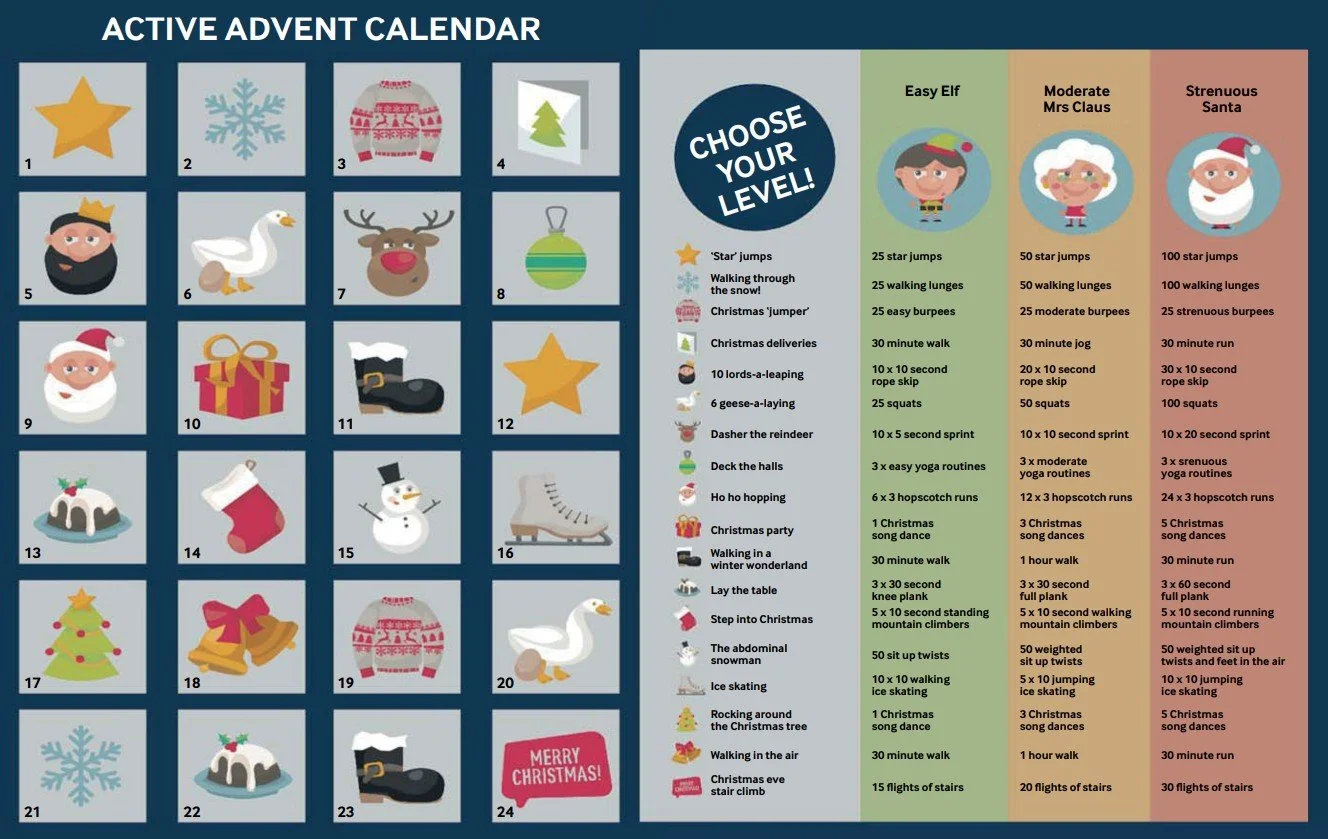
BMJ 2022;379:e072807 http://dx.doi.org/10.1136/ bmj‑2022‑072807
Choose Balanced Snacks
Pick snacks that won’t spike your blood sugar:
Greek yogurt + pecans
Carrots + hummus
Apple slices + cheese
Holiday snack ideas include roasted nuts, popcorn, deviled eggs, or a small charcuterie board.
Stay Hydrated and Start Small
Drinking water throughout the day helps with appetite and energy. Begin meals with smaller portions - you can always go back for more.
Practice Healthy Stress Coping Skills
Even though the holidays are fun, stress can still happen - busy schedules, family plans, and feelings around food can all add up. If stress leads you to eat more, you’re not alone. Emotional eating is common, especially around highly enjoyable holiday foods. People cope with stress in different ways:
Avoidance coping: distracting yourself or escaping the situation. This can give temporary relief, but it usually doesn’t solve the problem.
Emotion-oriented coping: soothing or comforting yourself when the situation can’t be changed. This can be helpful when used mindfully.
Task-oriented coping: taking action to address the parts of the situation you can control. This is often the most effective approach for long-term stress management.
If stress makes you want to eat, consider these healthy stress coping ideas:
Taking a short walk
Listening to music
Deep breathing
Journaling
Spending time with friends
Checking in with yourself
These tools help you care for your mind and body without turning to food every time stress hits.
Protect Your Sleep
Lack of sleep can change hormones that control hunger and stress. This may lead to increased appetite, higher cortisol, and more cravings. Try to keep a regular sleep schedule when possible.
A Compassionate Approach to Holiday Health
Holiday meals and gatherings are meant to be enjoyed. Remember, the holidays are about connection. Food traditions matter because they bring people together and create memories. Eating more at gatherings doesn’t mean you lack control. Feeling stressed doesn’t mean you’re doing something wrong. These experiences are common and human. So instead of focusing on strict rules, focus on small wins:
Taking a short walk
Choosing water
Listen to your hunger
Getting to bed earlier
Choosing one nutritious snack
Final Thoughts
The winter holidays can be joyful and challenging at the same time. By using small habits, managing stress, and showing compassion to yourself, you can support your health without giving up the things you love. You deserve a season that feels good, inside and out.
Here’s what to keep in mind:
You don’t have to earn your food.
You don’t have to exercise perfectly.
You don’t have to restrict everything.
You can celebrate, connect, rest, and care for yourself—all at the same time. If you support yourself with kindness, you’re already ahead.
Samantha Patterson, CHES®, is a certified Health Education Specialist and summa cum laude graduate from Arizona State University’s College of Health Solutions. She shares approachable, evidence-based guidance for building sustainable health habits that are realistic, flexible, and supportive of everyday life.
Abdulan, I.M.; Popescu, G.; Mas,taleru, A.; Oancea, A.; Costache, A.D.; Cojocaru, D.-C.; Cump ̆at, C.-M.; Ciuntu, B.M.; Rusu, B.; Leon, M.M. Winter Holidays and Their Impact on Eating Behavior—A Systematic Review. Nutrients, 15(19),4201. https://doi.org/10.3390/nu15194201
BMJ 2022; 379 doi: https://doi.org/10.1136/bmj-2022-072807 (Published 19 December 2022)
